Easy Homemade Hummus Recipe for Creamy Perfect Dip

Great hummus should be smooth enough to scoop with a warm pita wedge, rich enough to feel satisfying, and bright enough that one bite makes you reach for another. The good news is that the best version does not require restaurant equipment or a long grocery list.
This easy homemade hummus recipe uses canned chickpeas, tahini, lemon juice, garlic, olive oil, and a few smart steps that make a real difference. The biggest one is simple: soften the chickpeas more than you think you need to. That small move helps the dip blend into a creamy, spoon-swirled bowl instead of a grainy paste.
You can make it in about 20 minutes, including the optional simmer that improves the texture. Serve it with vegetables, pita, crackers, grilled chicken, falafel, roasted vegetables, or a simple grain bowl.

Good hummus starts with soft chickpeas
Creamy hummus is less about adding more oil and more about getting the chickpeas tender enough to blend well. Canned chickpeas are already cooked, but they are often still firm. That firmness is fine for salads, but it can leave hummus with a slightly gritty texture.
The fix is to simmer the drained chickpeas in water with a small pinch of baking soda. Baking soda raises the pH of the water, which helps soften the chickpea skins. After 10 minutes or so, the chickpeas become tender and easy to crush between your fingers.
You do not have to peel each chickpea. Some cooks swear by it, and peeling does create a silky dip, but it also adds time. Simmering gives you most of the benefit with much less work.
A few other choices help too:
Use good tahini that tastes nutty, not harsh or stale.
Blend the tahini and lemon juice before adding the chickpeas.
Add ice water slowly while the food processor runs.
Give the machine enough time. Two full minutes can change the texture.
Here is the basic recipe at a glance.
Details | Amount |
Yield | About 2 cups |
Prep time | 10 minutes |
Cook time | 10 minutes |
Total time | About 20 minutes |
Best tool | Food processor or high-speed blender |
Storage | 4 to 5 days in the refrigerator |

Ingredients that make the dip taste balanced
Hummus has only a few main ingredients, so each one matters. The goal is balance. Chickpeas bring body, tahini brings richness, lemon adds brightness, garlic adds bite, and salt makes everything taste complete.
Chickpeas
Use one 15-ounce can of chickpeas, also called garbanzo beans. Drain and rinse them well. If you cook chickpeas from dried, use about 1 1/2 cups cooked chickpeas for this recipe.
Canned chickpeas vary by brand. Some are softer, some are firmer, and some are saltier. Taste one before you start. If it tastes very salty, start with less salt and adjust at the end.
Tahini
Tahini is sesame seed paste, and it gives hummus its signature flavor. Stir the jar before measuring because the oil often separates. Look for tahini with a pourable texture. If it is dry, chalky, or very bitter, the finished hummus will show it.
For this recipe, 1/4 cup gives a creamy result without overpowering the chickpeas. If you love a stronger sesame flavor, add another tablespoon after blending and taste again.
Lemon juice
Fresh lemon juice is best here. Bottled lemon juice can taste flat or sharp. One large lemon usually gives about 3 tablespoons of juice, which is just right for a bright but not sour dip.
Garlic
One small garlic clove is enough for a balanced bowl. Raw garlic gets stronger as hummus sits, so resist the urge to add several cloves at the start. If the garlic is large, use half.
For a mellow flavor, let the minced garlic sit in the lemon juice for a few minutes before blending. The acid softens the sharp edge.
Olive oil
Olive oil adds a smooth finish and makes the hummus feel lush. Blend in 2 tablespoons, then drizzle more on top before serving.
Ice water
Ice water might sound small, but it helps loosen the hummus and gives it a lighter, whipped texture. Add it 1 tablespoon at a time until the dip looks creamy and soft.
How to make creamy homemade hummus
This method is simple, but the order matters. Each step builds a better texture.
Ingredients
1 15-ounce can chickpeas, drained and rinsed
1/4 teaspoon baking soda
1/4 cup fresh lemon juice
1/4 cup tahini, well stirred
1 small garlic clove, minced
2 tablespoons extra-virgin olive oil, plus more for serving
1/2 teaspoon kosher salt, plus more to taste
1/2 teaspoon ground cumin, optional
2 to 4 tablespoons ice water
Paprika, chopped parsley, or extra chickpeas for serving
Instructions
Soften the chickpeas
Add the drained chickpeas to a small saucepan and cover them with water by about an inch. Stir in the baking soda. Bring to a gentle boil, then simmer for 8 to 10 minutes, until the chickpeas look swollen and very tender.
Drain and rinse with warm water. Do not worry if some skins loosen. That is a good sign.
Blend the lemon and tahini
Add the lemon juice and tahini to a food processor. Blend for 45 to 60 seconds. Stop and scrape down the sides.
This step makes the tahini lighter and creamier before the chickpeas go in. It also helps prevent thick clumps.
Add garlic, oil, salt, and cumin
Add the minced garlic, olive oil, salt, and cumin if using. Blend again until smooth and fragrant.
If you prefer a milder garlic flavor, mix the minced garlic with the lemon juice and let it sit for 5 minutes before adding the tahini.
Blend in the chickpeas
Add the softened chickpeas. Blend for 1 minute, scrape down the bowl, then blend for another minute.
The hummus will look thick at first. Let it keep running. A little patience now pays off.
Loosen with ice water
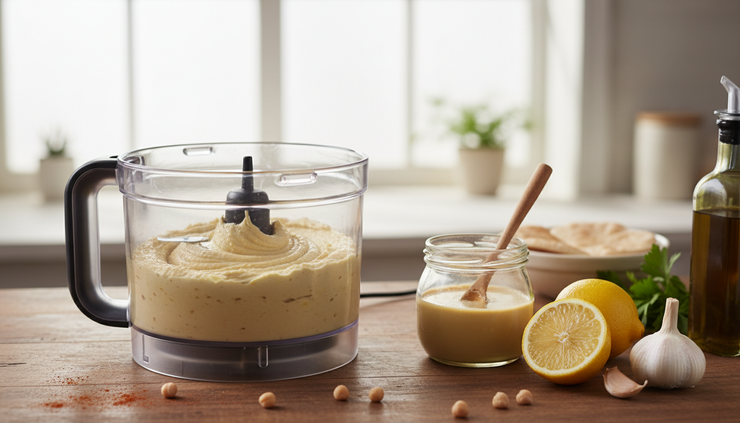
With the processor running, add ice water 1 tablespoon at a time. Stop when the hummus looks creamy, fluffy, and easy to spread.
For a thicker dip, use less water. For a softer bowl that swirls easily, use the full amount.
Taste and adjust
Taste the hummus before serving. Add more salt for depth, lemon juice for brightness, or tahini for a nuttier flavor.
Serve with a good finish
Spoon the hummus into a shallow bowl. Use the back of a spoon to make a swirl. Drizzle with olive oil and add paprika, parsley, or a few whole chickpeas.
Easy ways to serve and customize it
Plain hummus is never boring when it is made well, but it also handles add-ins beautifully. Keep the base recipe the same, then adjust with one or two extra flavors.
Try one of these simple variations:
Roasted red pepper hummus
Add 1/2 cup drained roasted red peppers. Pat them dry first so the dip does not become watery.
Spicy hummus
Add a pinch of cayenne, a spoonful of harissa, or a drizzle of chili oil on top.
Herby hummus
Blend in a handful of parsley, cilantro, basil, or dill. Add extra lemon to keep the flavor fresh.
Roasted garlic hummus
Swap the raw garlic for 2 to 3 roasted garlic cloves. This gives a sweeter, deeper flavor.
Extra lemon hummus
Add more lemon zest and a little extra lemon juice. This version is especially good with grilled vegetables or fish.
For serving, think beyond pita. Hummus works as a spread, dip, sauce, or bowl base.
A few easy pairings:
Warm pita or pita chips
Carrot sticks, cucumber slices, radishes, and bell peppers
Crackers or toasted flatbread
Falafel, shawarma-style chicken, or grilled vegetables
Grain bowls with rice, quinoa, or farro
Sandwiches and wraps instead of mayo
If you are serving hummus for guests, spread it on a platter instead of keeping it in a deep bowl. Add sliced cucumbers, olives, tomatoes, herbs, and a generous drizzle of olive oil. A wider surface gives every scoop a bit of topping.
How to store hummus and fix common texture problems
Homemade hummus keeps well, which makes it useful for quick lunches and snacks. Transfer it to an airtight container and refrigerate it for 4 to 5 days. The garlic flavor may get stronger as it sits, so keep that in mind if you make it ahead.
If the top looks a little dry after chilling, stir in a spoonful of cold water or olive oil before serving. Hummus firms up in the fridge, so let it sit at room temperature for 10 to 15 minutes if you want it softer.
You can also freeze hummus. Place it in a freezer-safe container, leave a little room at the top, and freeze for up to 3 months. Thaw it in the refrigerator, then blend or stir it with a splash of water to bring back the creamy texture.

Here is how to fix the most common issues.
Problem | What to do |
Hummus is too thick | Blend in ice water 1 tablespoon at a time |
Hummus tastes flat | Add salt, lemon juice, or both |
Hummus tastes too sharp | Add more tahini or chickpeas to mellow it |
Hummus is gritty | Blend longer, then add more water |
Garlic is too strong | Let the hummus rest, or blend in more chickpeas and tahini |
Hummus tastes bitter | Add a little more lemon, salt, and olive oil, then taste again |
The best homemade hummus is not complicated. Start with soft chickpeas, use fresh lemon and good tahini, blend longer than you think, and loosen the dip with ice water until it turns smooth and creamy.
Make it once, then adjust it to your taste. A little more lemon, a bit more tahini, or a warm drizzle of olive oil can make the bowl feel exactly right.


Comments